Aneurysms
An aneurysm is a permanent dilatation of an artery. The most common is the abdominal aortic aneurysm: it usually grows slowly without symptoms, and its main risk is rupture, which is a life-threatening emergency.
Who does it affect?
It is more common in men over 65, current or former smokers and those with a family history of aneurysm. High blood pressure and atherosclerosis also play a part. Women have it less often, but their aneurysms tend to rupture at smaller diameters.
Symptoms
Most cause no symptoms and are discovered by chance on an ultrasound or CT scan done for another reason. Sometimes a pulsation can be felt in the abdomen.
Sudden severe pain in the abdomen or back, with dizziness or fainting, in a person with a known aneurysm is an emergency: call 112.
Screening
Ultrasound screening studies in men aged 65 and over have been shown to reduce aneurysm-related mortality: in the British MASS trial, aneurysm-related deaths fell by 48% at 10 years. It is a simple abdominal ultrasound scan, without radiation.
Monitoring and when to operate
Small aneurysms are monitored with regular ultrasound scans, at intervals that depend on their size, and risk factors are controlled, especially smoking. The European guidelines (ESVS 2024) recommend considering repair when the diameter reaches about 5.5 cm in men and 5.0 cm in women, when it grows rapidly or if it causes symptoms. Below these sizes, the risk of repair usually outweighs the risk of waiting.
Treatment
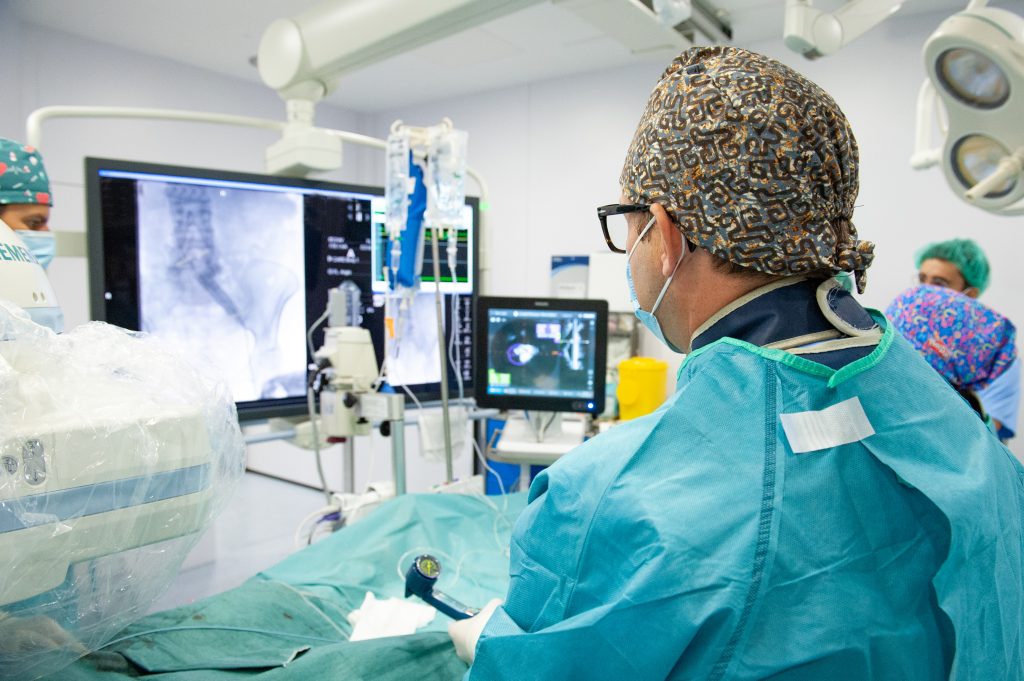
Stent graft (EVAR)A graft is placed inside the aorta through the arteries in the groin, often by puncture without wounds (PEVAR). Recovery is faster. Regular imaging check-ups are required.
Open surgeryThe dilated segment is replaced with a prosthetic graft through an abdominal incision. It is more invasive but very durable, with fewer long-term check-ups.
The choice depends on the anatomy of the aneurysm and each patient’s age and health. I also treat aneurysms of the iliac and popliteal arteries.
Videos on this topic (in Spanish)

References
- Wanhainen A, Van Herzeele I, Bastos Goncalves F, et al. European Society for Vascular Surgery (ESVS) 2024 Clinical Practice Guidelines on the Management of Abdominal Aorto-Iliac Artery Aneurysms. Eur J Vasc Endovasc Surg. 2024;67(2):192-331.
- Thompson SG, Ashton HA, Gao L, Scott RA; Multicentre Aneurysm Screening Study Group. Screening men for abdominal aortic aneurysm: 10 year mortality and cost effectiveness results from the randomised Multicentre Aneurysm Screening Study. BMJ. 2009;338:b2307.
Patient information reviewed by Dr Óscar Merino, vascular surgeon. It does not replace an individual medical assessment.
Would you like an assessment?
Consultation with duplex ultrasound at Clínica Rotger, in the centre of Palma.
Follow me
Weekly tips on circulation and vascular health (in Spanish).