Nutcracker syndrome
Compression of the left renal vein in the “pincer” formed by the aorta and the superior mesenteric artery.
Seeing the compression on a scan is not enough: it must be shown that it alters blood velocity (a haemodynamic change) and that it explains the symptoms.
Common symptoms
- Left-sided low back or flank pain.
- Pain with periods and during sexual intercourse.
- Recurrent urinary tract infections.
- Heaviness or pain in the pelvis and genitals.
- Blood in the urine that is not visible (microscopic haematuria).
- Varicose veins with an atypical distribution in the genitals, groin and legs.
Phenomenon or syndrome?
The left renal vein passes between the aorta and the superior mesenteric artery before reaching the inferior vena cava. When this “pincer” closes, the vein narrows and blood from the left kidney seeks alternative outlets: the gonadal vein (ovarian or testicular), the lumbar veins and the pelvic veins.
We speak of the nutcracker phenomenon when the compression is only seen on imaging, without symptoms, which is relatively common. We speak of a syndrome when the compression alters blood flow and explains the patient’s symptoms. This distinction is what determines whether treatment is needed.
Diagnosis
Investigation is carried out step by step, from the least to the most invasive:
- Clinical history and examination, including a urine test.
- Abdominal duplex ultrasound: measures the diameter and blood velocity in the renal vein before and at the point of compression.
- CT or MR angiography: shows the arterial pincer, the angle between the two arteries and the collateral veins.
- Venography with intravascular ultrasound (IVUS) and measurement of the pressure gradient between the renal vein and the vena cava, to confirm the haemodynamic impact and plan treatment.
In women it is often associated with pelvic congestion; in men it may present as a varicocele. The same arterial pincer can also compress the duodenum (Wilkie syndrome).
Treatment
Treatment is more complex. Simple stenting is being abandoned because of its results and the risk of stent migration; open surgery with a bypass between the vena cava and the renal vein has been another valid option, but it is more invasive. The indication must be highly individualised and always after conservative treatment has been exhausted.
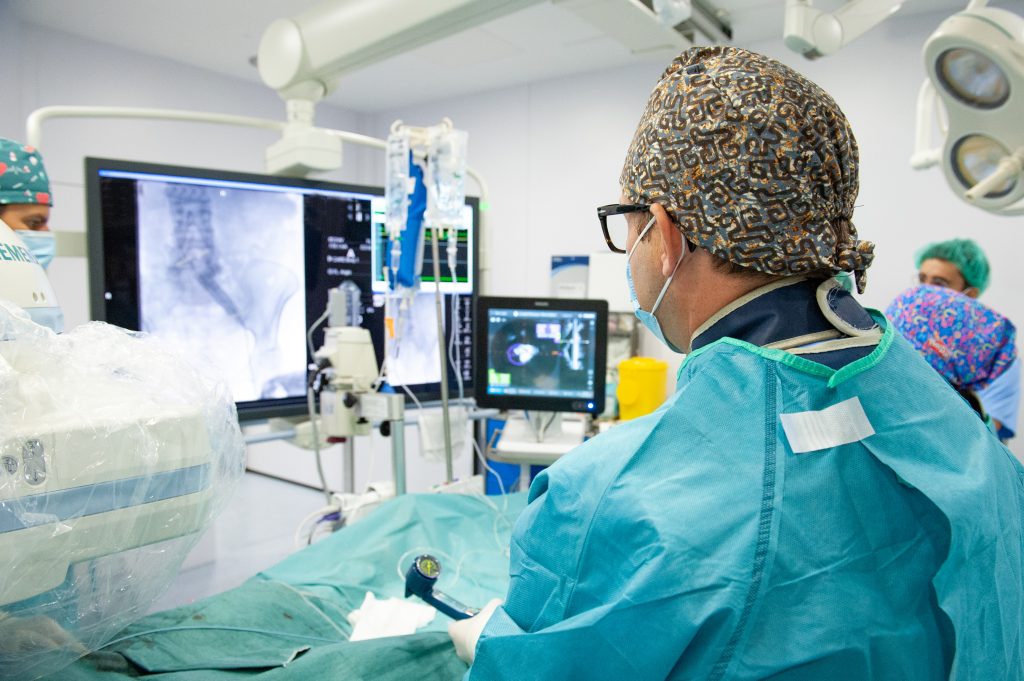
At present we favour a “hybrid” procedure, in which the stent is implanted without oversizing and sutured directly to the vein through an incision that is much less invasive than an abdominal bypass, with a much faster and more comfortable recovery.
Frequently asked questions
Does Nutcracker syndrome always need surgery?
No. A review published in the journal of the European Society for Vascular Surgery notes that symptoms often improve with conservative treatment. Intervention is reserved for cases with significant symptoms that do not improve.
How is it related to pelvic congestion and varicocele?
When the renal vein is compressed, blood escapes through the gonadal vein towards the pelvis. In women this can cause pelvic and vulval varicose veins; in men, varicocele. That is why the whole venous system should be assessed before treating those varicose veins.
What is the hybrid procedure?
A stent that is not oversized is implanted in the renal vein and fixed directly to the vein through a small incision, as a less invasive alternative to abdominal bypass with a faster recovery.
Do you see patients from outside Mallorca?
Yes. You can send me your test results: I review them in advance and we hold a first video consultation. Here is how it works.
References
- Ananthan K, Onida S, Davies AH. Nutcracker syndrome: an update on current diagnostic criteria and management guidelines. Eur J Vasc Endovasc Surg. 2017;53(6):886-894.
- Contemporary management of Nutcracker syndrome: a systematic review. Ann Vasc Surg. 2025;121:406-421.
Patient information reviewed by Dr Óscar Merino, vascular surgeon. It does not replace an individual medical assessment.
Would you like an assessment?
Consultation with duplex ultrasound at Clínica Rotger, in the centre of Palma.
Related
Follow me
Weekly tips on circulation and vascular health (in Spanish).